Legal information affects far more than courtroom disputes. Contracts, employment relationships, online purchases, property arrangements, business decisions and privacy choices can all involve legal rights or responsibilities. Yet the language used in statutes, regulations and court documents is often difficult for a general reader to interpret.
CNLawBlog is an online legal-information publication that aims to make these subjects more approachable. Through structured guides and explanatory articles, the website introduces readers to legal systems, everyday rights, research practices and related developments without requiring them to have a professional legal background.
The publication is available at CNLawBlogs.net. It should not be confused with similarly named websites or treated as a government portal, court database or substitute for a qualified legal professional.
The Editorial Purpose of CNLawBlog
CNLawBlog is built around a straightforward editorial purpose: helping readers develop a clearer understanding of legal topics.
Legal writing can become inaccessible when it relies heavily on specialist terminology or assumes that readers already understand how laws and institutions operate. Educational publishing helps narrow that gap by organizing complicated subjects into manageable sections, explaining unfamiliar terms and connecting abstract principles with recognizable situations.
The publication’s role is therefore informational. Its articles can help readers:
- Become familiar with foundational legal concepts
- Understand why jurisdiction matters
- Recognize the difference between rights and responsibilities
- Learn how courts, legislation and regulatory bodies relate to one another
- Evaluate online legal information more critically
- Identify questions that may require further research
- Recognize when professional assistance may be appropriate
This approach supports legal awareness, but it does not turn general content into advice for an individual matter.
Clear Explanations Without False Certainty
Responsible legal content must balance accessibility with caution. Simplifying a concept can help readers, but oversimplifying it may remove conditions, exceptions or procedural details that affect how the law applies.
CNLawBlog’s educational format is intended to provide orientation rather than guaranteed answers. A useful legal article should explain the central idea while acknowledging important limitations. These may include differences between jurisdictions, changes in legislation, factual distinctions and the effect of court interpretation.
For instance, a general article can explain how a contract creates obligations. It cannot determine whether a particular clause is enforceable without considering the document, governing law, circumstances and relevant legal authority.
Similarly, an overview of consumer rights may introduce common protections, but the precise remedies available to a consumer will depend on where the transaction occurred, what was purchased and which rules apply.
Careful language matters because legal outcomes rarely depend on a single fact or rule.
Subjects Readers Can Explore
The website’s existing content establishes a broad foundation for legal learning rather than focusing exclusively on one practice area. Its articles address how legal institutions function, how rights appear in daily life and how information should be evaluated before it is relied upon.
Legal Systems and Public Institutions
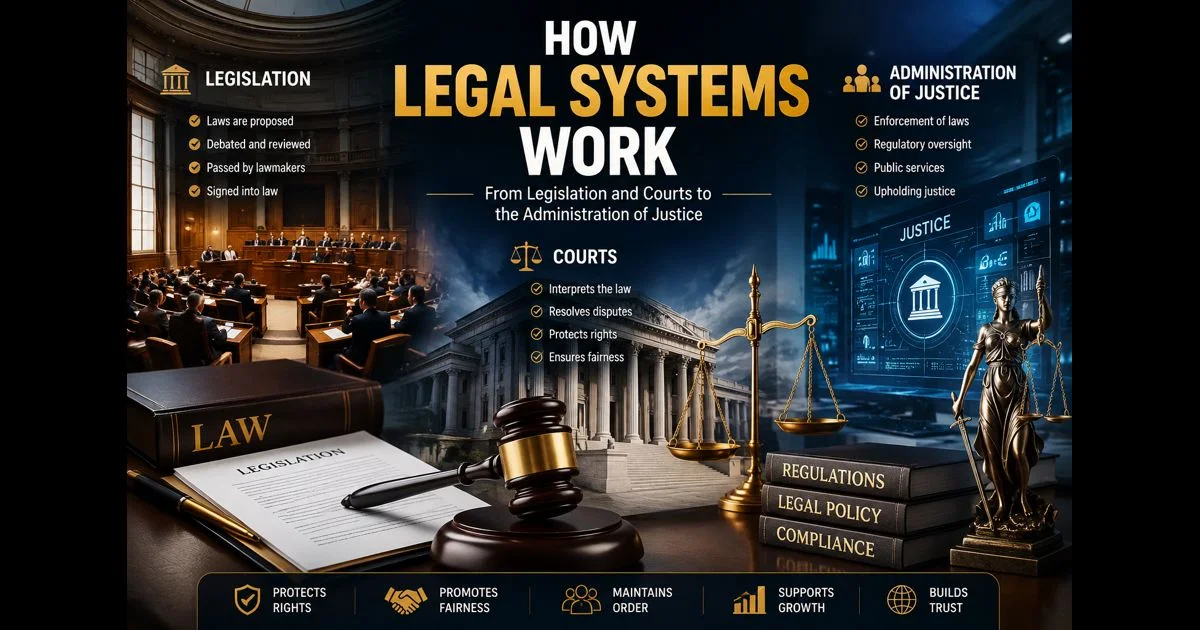
Understanding law begins with knowing where it comes from and how it is administered. Legislatures, courts, regulators and other public bodies can have different functions within a legal system.
A reader who understands these distinctions is better equipped to tell the difference between legislation, a judicial decision, regulatory guidance and an informal explanation. CNLawBlog’s guide to how legal systems work provides useful background on the relationship between laws, courts and the administration of justice.
This foundational knowledge is relevant even when someone is not involved in a dispute. Legal institutions influence employment, commerce, property ownership, public services and many ordinary transactions.
Rights and Responsibilities in Everyday Life
Legal responsibilities frequently arise through routine decisions. Accepting online terms, signing a lease, purchasing a subscription or entering an employment agreement can create obligations even when no lawyer or courtroom is involved.
Rights and responsibilities also operate together. A person may hold certain protections while still being required to respect an agreement, another person’s property, privacy interests or applicable regulations.
Educational coverage can make these relationships easier to recognize. It can also encourage readers to review documents carefully, keep relevant records and seek clarification before accepting an obligation they do not understand.
Digital Activity and Information Use
Digital services have introduced legal considerations into communication, commerce and data handling. Privacy policies, electronic agreements, intellectual property, online conduct and recurring subscriptions are now part of many people’s daily lives.
These topics often cross multiple areas of law, and applicable requirements can vary considerably. An educational article may provide a helpful starting framework, but readers should check current rules and authoritative sources before making important decisions.
Research and Source Evaluation
Finding legal content online is easy; deciding whether it is dependable is much harder. Search results can include outdated articles, commercial pages, personal opinions and explanations written for a different jurisdiction.
Good research requires more than reading the first available answer. Readers should identify the relevant jurisdiction, examine the publication date, inspect supporting references and compare secondary explanations with primary legal materials whenever possible.
CNLawBlog’s practical guide to researching and verifying legal information online explores these habits in greater detail.
The Difference Between Legal Information and Legal Advice
This distinction is central to using CNLawBlog responsibly.
Legal information explains a general rule, institution, process or issue for an audience. It may describe common principles and identify factors that are often relevant.
Legal advice applies the law to a particular person’s circumstances. Providing that advice usually requires a detailed understanding of facts, documents, deadlines, jurisdiction and the reader’s objectives. It may also require professional authorization within the relevant jurisdiction.
An online article cannot ordinarily perform that individualized analysis. It does not know whether evidence is complete, whether a deadline is approaching or whether an exception changes the legal position.
Readers should therefore use CNLawBlog to improve their general understanding, prepare questions and locate areas for further investigation—not to predict the result of a specific case.
Why Jurisdiction Changes the Answer
Law is not uniform across every country, state, province or region. Two places may use similar legal language while applying different rules or procedures. Even within one country, local requirements may affect contracts, employment, property, consumer matters and court filings.
Readers should check whether an article identifies a relevant jurisdiction. When no jurisdiction is specified, the discussion should be treated as a general educational overview rather than a statement of locally applicable law.
Before acting on legal information, consider:
- Which country, state or province governs the matter?
- Is the cited rule currently in force?
- Does a local regulation create additional requirements?
- Has a court interpreted the provision?
- Are there deadlines or procedural rules involved?
- Does an exception apply to the particular situation?
These checks reduce the risk of applying a broadly stated principle where it does not belong.
How to Read CNLawBlog Responsibly
Readers can obtain greater value from educational legal content by following a deliberate process.
Start by identifying the general subject. Determine whether the question concerns a contract, employment matter, consumer transaction, property issue, privacy concern or another legal area. This provides useful vocabulary for deeper research.
Next, separate general explanation from authoritative law. Blog posts and educational guides are secondary sources. They can explain and contextualize an issue, while statutes, regulations, court decisions and official publications provide primary or authoritative material.
Publication and update dates should also be checked. A well-written article may become outdated after a legislative amendment, new regulation or significant judgment.
Finally, consider the consequences of getting the answer wrong. A minor educational question may require only general reading. A dispute, formal notice, court deadline, major contract or matter involving significant rights deserves timely attention from an appropriately qualified professional.
Editorial Qualities That Support Reader Trust
Trust in a legal publication should come from observable practices rather than promotional language. Readers can evaluate CNLawBlog—or any other legal website—by looking for several characteristics.
Transparent Scope
A responsible publication explains that its material is educational and does not create a lawyer-client relationship. It avoids presenting broad articles as personalized conclusions.
Balanced Language
Statements such as “always,” “guaranteed” or “certain to succeed” are rarely appropriate in general legal content. Balanced writing acknowledges uncertainty and avoids predicting outcomes without evidence.
Useful Context
Definitions alone are often insufficient. Strong explanatory writing shows why a concept matters, where it commonly arises and which variables could affect its application.
Attention to Sources
Important legal claims should be traceable to relevant legislation, judicial decisions, regulators or other authoritative material when appropriate. Readers should be encouraged to examine original sources rather than relying exclusively on a summary.
Visible Maintenance
Dates, corrections and meaningful updates help readers determine whether an article reflects current information. Legal publications should revisit material when the governing framework changes.
Who May Find CNLawBlog Useful?
The publication can serve several types of readers, provided it is used within its educational limits.
Students and early-stage researchers may use it to become familiar with legal vocabulary and institutional structure. Individuals can explore how legal principles relate to common activities such as employment, purchasing and digital privacy.
Business owners and professionals may use general guides to recognize compliance questions, contractual considerations or areas that deserve professional review. Writers and researchers can also benefit from guidance on source evaluation and responsible use of legal information.
The value for each reader lies primarily in improved awareness. The site should help readers understand an issue well enough to conduct better research or ask more informed questions—not encourage them to handle serious legal matters without appropriate support.
What CNLawBlog Cannot Determine
No general publication can evaluate confidential documents, establish all relevant facts or account for every local rule affecting an individual situation. CNLawBlog cannot determine:
- Whether a person has a valid legal claim
- How a court will decide a dispute
- Whether a specific contract is enforceable
- Which filing strategy should be followed
- What compensation or remedy may be available
- Whether a deadline has expired
- Which legal professional is suitable for a particular case
These questions require fact-specific assessment. When a matter could affect liberty, finances, employment, property, immigration status or other important interests, readers should consult an appropriately qualified professional without unnecessary delay.
Building Legal Awareness Through Careful Reading
Legal literacy is not about memorizing every statute. It is the ability to recognize when a decision has legal consequences, locate dependable information and distinguish an educational explanation from authoritative or individualized guidance.
CNLawBlog contributes to this process by presenting legal topics in an organized, readable format. Its greatest practical value is as a starting point: a place where readers can learn the language of an issue, understand its broader context and prepare for more focused research.
That value depends on responsible use. Articles should be read alongside current official materials where accuracy is critical, and professional help should be sought when personal rights, deadlines or substantial consequences are involved.
Final Thoughts
About CNLawBlog, the clearest description is that it is an educational legal-information publication available through CNLawBlogs.net. Its content is designed to make legal concepts, systems and research practices easier for general readers to approach.
The website is most useful when treated as a learning resource rather than an official authority or source of personalized advice. By checking jurisdiction, reviewing dates, consulting primary materials and recognizing the limits of general information, readers can use CNLawBlog as part of a more responsible legal-research process.
Frequently Asked Questions
Is CNLawBlog a government or court website?
No. CNLawBlog is an independent informational website. Official laws, court records, forms and procedural requirements should be confirmed through the appropriate government, court or regulatory source.
Does CNLawBlog provide personalized legal advice?
Its published articles provide general educational information. They should not be treated as advice tailored to an individual’s facts or circumstances.
Can an article apply in every jurisdiction?
Not necessarily. Laws and procedures vary between countries and may also differ among states, provinces or local regions.
How should important information be verified?
Check applicable legislation, court decisions, regulator guidance and official government resources. Confirm that the information is current and relevant to the correct jurisdiction.
When should a reader contact a legal professional?
Professional assistance should be considered when a matter involves a dispute, deadline, formal notice, court proceeding, substantial contract or significant personal, business or financial consequences.
What is the correct website address?
The publication discussed in this article is available at https://cnlawblogs.net/.
Legal disclaimer: This article is provided for general informational and educational purposes only. It does not constitute legal advice, establish a lawyer-client relationship or guarantee any legal outcome. Laws and procedures differ by jurisdiction and may change over time. Consult an appropriately qualified legal professional regarding a specific matter.