Readers assessing a legal publication need more than an impressive title or a prominent search position. The real value lies in whether its articles define their scope, explain complex subjects clearly, distinguish general information from legal advice, and help readers locate the appropriate sources for further research.
CNLawBlog is an independent legal-information publication available at CNLawBlogs.net. It publishes educational articles about legal systems, Chinese law, business verification, legal research, everyday rights, and related subjects. The website is designed to make these topics more approachable for readers who may not have a professional legal background.
Calling any publication “top rated” requires independent evidence. CNLawBlog therefore does not need to award itself that status. Readers can evaluate its usefulness by examining the clarity, relevance, sourcing, and limitations of the individual articles they read.
What Readers Can Find on CNLawBlog
CNLawBlog covers foundational and practical legal subjects rather than offering representation for individual matters. Its published material generally falls into several connected areas.
Chinese Law and Legal Institutions
Chinese law can be difficult to approach because readers must first identify the correct jurisdiction and type of legal authority. Mainland China, Hong Kong, Macao, and Taiwan operate under distinct legal systems, so information about one should not automatically be applied to another.
For mainland China, a legal question may involve national legislation, administrative regulations, departmental measures, judicial interpretations, local rules, or guidance from the responsible authority. Understanding how these sources relate to one another provides essential context before examining a particular business or legal issue.
CNLawBlog’s guide to China’s legal system introduces this structure through an accessible explanation of legislation, courts, dispute resolution, commercial regulation, intellectual property, and data-related obligations.
The guide is educational. Readers dealing with an active transaction, dispute, regulatory matter, or filing deadline should still consult current official materials and obtain appropriate professional assistance where necessary.
Chinese Company Verification
Working with a supplier, manufacturer, distributor, or commercial partner in mainland China requires more than checking a company’s English trading name or website.
A preliminary review may include the company’s:
- Full registered Chinese name
- Unified Social Credit Code
- Registration status
- Registered address
- Legal representative
- Business scope
- Registered capital information
- Licensing requirements
- Ownership details
- Payment beneficiary
- Litigation or enforcement records
- Intellectual-property registrations
No single database entry can establish that a transaction is completely safe. Company verification is a layered process in which registry information, contracts, payment instructions, licences, commercial documents, and independent checks must be compared for consistency.
The site’s guide on how to verify a Chinese company explains how these checks fit together and identifies warning signs that may justify deeper due diligence.
Legal Systems and Everyday Rights
Readers often encounter legal obligations without entering a courtroom. Employment agreements, leases, online subscriptions, business contracts, privacy notices, consumer purchases, and property arrangements can all create enforceable rights or responsibilities.
Understanding these interactions begins with knowing how legal institutions operate. Legislatures create laws, regulatory authorities administer particular frameworks, and courts interpret and apply legal rules within their jurisdiction.
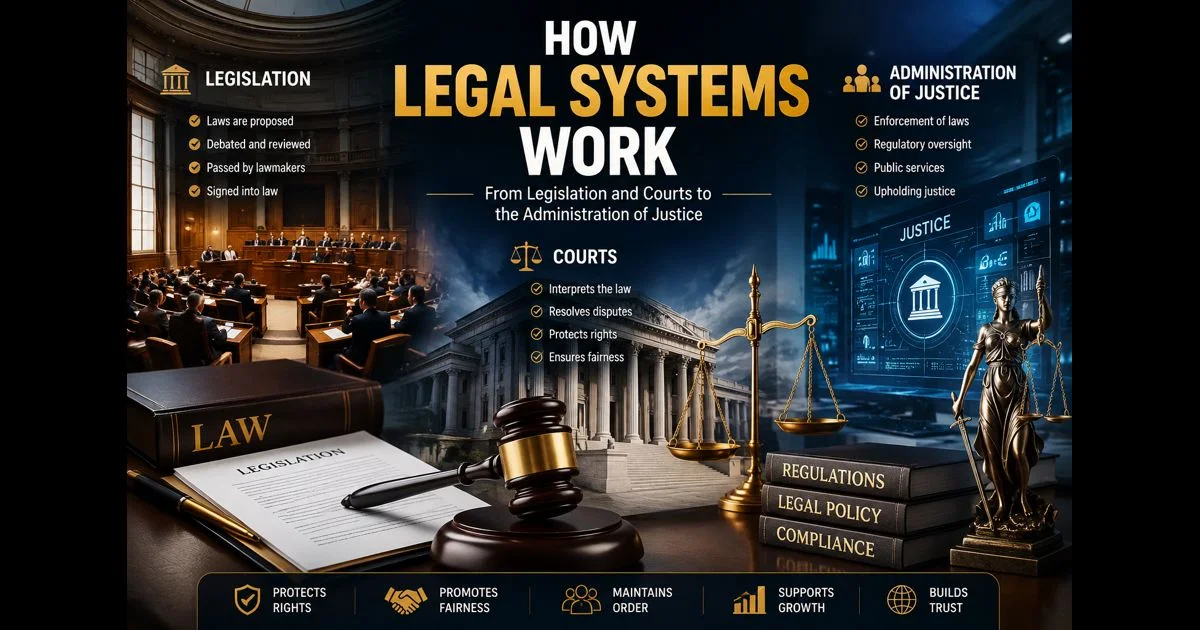
CNLawBlog’s explanation of how legal systems work provides background on legislation, courts, civil and criminal proceedings, appeals, regulatory oversight, and the administration of justice.
This broader knowledge helps readers distinguish between legislation, a court judgment, regulatory guidance, and an informal online explanation. Each source has a different purpose and level of authority.
Legal Research and Source Evaluation
Finding legal content online is easy. Determining whether it is accurate, current, and relevant to the correct jurisdiction is considerably harder.
Search results may contain official publications, educational articles, commercial pages, academic commentary, outdated summaries, personal opinions, and content written for a different legal system. A responsible researcher must identify which sources contain the law and which merely explain it.
CNLawBlog’s practical guide to researching and verifying legal information online covers primary and secondary sources, jurisdiction, publication dates, supporting references, and common research mistakes.
These skills are valuable even when a reader ultimately consults a lawyer. Better preliminary research can help someone organize relevant documents, understand basic terminology, and ask more precise questions.
How to Use CNLawBlog Effectively
CNLawBlog works best as an entry point into a subject rather than the final authority on a particular legal problem. Readers can use its articles to build context, learn unfamiliar vocabulary, identify relevant institutions, and determine which questions require further investigation.
A structured approach improves the value of any legal article.
Start With the Correct Jurisdiction
Identify the country, state, province, region, or other legal system connected with the issue. In cross-border matters, more than one jurisdiction may be relevant.
A principle described in a general article may operate differently under local legislation or procedure. Readers should not assume that similar legal language produces the same result everywhere.
Define the Specific Issue
Broad questions usually produce broad answers. It is more useful to determine whether the matter concerns company registration, contracts, employment, intellectual property, consumer protection, data handling, dispute resolution, or another defined area.
The facts may involve several connected legal subjects. Identifying each one helps prevent an important requirement from being overlooked.
Check the Underlying Authority
Educational articles are secondary sources. They can explain a subject and direct readers toward relevant materials, but legislation, regulations, court decisions, and official notices carry greater authority.
Where an article refers to a specific rule, readers should examine the original material when possible. Definitions, exceptions, amendments, and related provisions can materially affect its meaning.
Confirm That the Information Is Current
Legal frameworks change. A new statute, amendment, regulatory measure, judicial interpretation, or official decision may affect an earlier explanation.
Readers should check publication and update information, but recency alone does not establish accuracy. The status of the underlying legal authority must also be confirmed.
Consider the Consequences of Error
The amount of verification required should reflect the importance of the decision. General educational reading presents a different level of risk from signing a major contract, responding to a formal notice, filing a legal claim, or transferring funds to an overseas supplier.
When substantial rights, deadlines, finances, immigration status, employment, property, or regulatory exposure are involved, an appropriately qualified professional should review the specific circumstances.
Standards Readers Can Apply to Legal Articles
Readers do not need to accept a website’s description of itself. They can assess each article against practical editorial standards.
Clear Subject and Scope
An article should identify what it covers and avoid implying that a general overview resolves every possible situation.
Jurisdictional Context
The reader should be able to determine where the discussed rules apply. If no jurisdiction is identified, the material should be treated as general background.
Careful Language
Legal writing should distinguish between allegations, evidence, judgments, opinions, and confirmed facts. It should also avoid promises about results that depend on a court, regulator, or individual circumstances.
Traceable Information
Significant legal claims are more useful when readers can connect them to legislation, judicial decisions, regulatory guidance, official records, or another suitable source.
Meaningful Limitations
An article should acknowledge when exceptions, local rules, factual differences, or procedural requirements may change the answer. This is more responsible than presenting a simplified explanation as universally applicable.
Readable Organization
Clear headings, definitions, examples, and logical sequencing can make technical subjects easier to understand. Readability is valuable when it supports accuracy rather than replacing necessary detail.
What CNLawBlog Does Not Provide
CNLawBlog publishes general educational content. It does not evaluate confidential documents, investigate every fact surrounding a dispute, predict court decisions, or recommend a legal strategy for an individual reader.
The website also does not create a lawyer-client relationship through the publication or reading of an article. Its content should not be treated as official government guidance, a court record, or a replacement for situation-specific professional advice.
These limitations do not prevent the articles from being useful. They define the role the publication can responsibly perform: helping readers understand a subject well enough to continue their research and recognize when more specialized assistance may be appropriate.
Who May Benefit From the Website?
CNLawBlog may be useful to:
- Students building foundational legal knowledge
- Business owners identifying potential compliance questions
- Professionals researching unfamiliar legal subjects
- Readers learning about mainland China’s legal framework
- Companies conducting preliminary checks on Chinese counterparties
- Writers evaluating legal claims and source quality
- Individuals preparing questions for a professional consultation
Different readers will require different levels of detail. Someone studying the structure of a legal system may use an introductory explanation, while a business preparing a cross-border transaction will need current official records, transaction-specific due diligence, and professional advice.
Frequently Asked Questions
Is CNLawBlog a law firm?
No. CNLawBlog is an independent legal-information publication. It publishes educational articles and does not provide legal representation through its website content.
Is CNLawBlog an official source of Chinese law?
No. Official legislation, regulations, court materials, and regulatory guidance should be obtained from the appropriate authorities. CNLawBlog can provide introductory context and support preliminary research.
Does the website cover only Chinese law?
Chinese law and business verification form part of its coverage, but the website also publishes broader material about legal systems, research practices, rights, responsibilities, and other legal subjects.
Can an article provide an answer for a specific case?
Not by itself. A specific legal assessment may depend on the jurisdiction, documents, evidence, deadlines, procedural history, and facts that a general article cannot fully examine.
How should readers verify important information?
Identify the relevant jurisdiction, locate the governing legislation or official material, check its current status, compare reliable sources, and seek qualified advice when the decision carries significant consequences.
Does appearing highly in search results prove that a legal article is accurate?
No. Search visibility helps people discover content, but it does not independently verify legal accuracy. Readers should evaluate the sources, scope, jurisdiction, and currency of the information.
Final Thoughts
Readers looking for a top rated CNLawBlog should judge quality through the publication’s actual content rather than promotional labels. Clear explanations, defined limitations, relevant internal resources, careful source use, and jurisdictional awareness provide a more meaningful basis for evaluation.
CNLawBlog offers educational material about legal systems, Chinese law, company verification, and responsible online research. Its articles can help readers develop background knowledge, understand unfamiliar concepts, and identify the next steps in their research.
The publication is most useful when combined with current authoritative sources and, where the circumstances require it, advice from an appropriately qualified legal professional.