Legal information is most useful when it explains more than a rule. It should identify where that rule applies, distinguish binding authority from general commentary, acknowledge important exceptions and show readers what still needs to be verified. Without this context, even a technically correct statement can lead to an incorrect conclusion.
CNLawBlog is an independent legal-information publication available at CNLawBlogs.net. Its appropriate role is educational: explaining legal systems, rights, responsibilities, institutions and research principles in language that general readers can understand. It is not a government portal, court database, law firm or replacement for advice from a qualified legal professional.
That distinction is especially important because similar names may appear on unrelated domains. The name CNLawBlog alone does not establish an affiliation with another publication, legal practice, public authority or national legal system. Readers should confirm the domain and evaluate each article according to its own authorship, evidence, scope and publication details.
The Proper Role of an Educational Legal Publication
Law affects ordinary decisions long before a dispute reaches a courtroom. Employment agreements, rental arrangements, online purchases, privacy notices, business contracts and financial transactions all create rights or obligations. Accessible legal education can help readers recognize those consequences and approach important decisions more carefully.
An educational publication can provide:
- Clear definitions of legal concepts
- Background on courts, legislatures and regulatory bodies
- Explanations of common rights and responsibilities
- Introductions to legal research methods
- Context for contracts, consumer matters and business obligations
- Guidance on evaluating online legal information
- Recognition of situations requiring professional assistance
These functions support legal awareness, but they do not produce a definitive answer for an individual case. A general article usually cannot examine every relevant document, deadline, fact, procedural rule or jurisdictional difference. Its value lies in improving understanding and helping readers identify the next question that must be answered.
Why Legal Context Must Come Before Conclusions
Legal rules do not operate in isolation. Their meaning and effect depend on several connected factors. Responsible legal reading begins by identifying those factors instead of treating a short explanation as a universal answer.
Jurisdiction Determines Which Law Applies
Countries maintain different legal systems, but important variations can also exist between states, provinces, territories and municipalities. A rule that applies in one location may be modified, limited or entirely absent elsewhere.
Jurisdiction can affect:
- Which court has authority
- Which statute or regulation controls
- Whether a contractual clause is enforceable
- What procedural deadlines apply
- Which remedies are available
- Whether a previous judgment must be followed
- Which regulator supervises an activity
A legal article that does not establish jurisdiction should be read as general education. It may explain a principle, but it cannot confirm how that principle governs a specific matter.
Timing Can Change the Answer
Law develops through legislation, regulatory amendments, court decisions and revised administrative guidance. An article may accurately describe the law on its publication date and later become incomplete because the underlying authority has changed.
Readers should therefore examine:
- The original publication date
- Any visible update date
- The effective date of the relevant law
- Later amendments or replacement legislation
- Subsequent judgments that may alter an interpretation
- Current court or agency procedures
A recent date is helpful, but it is not proof of accuracy. The controlling legal material must still be checked when the matter carries meaningful consequences.
Facts Affect Legal Outcomes
Small factual differences can produce different legal results. A contract dispute may depend on the exact wording of a clause, how the agreement was formed, whether consideration existed, what each party did and which law governs the document. An employment matter may turn on worker classification, workplace location, company size or the reason for a decision.
General explanations cannot resolve these factual questions. They can help readers understand the legal framework, but applying that framework requires a complete and accurate record.
Procedure Can Be as Important as Substance
A person may have a valid legal position and still face difficulty if a limitation period expires, a required notice is not delivered, evidence is not preserved or a filing is made in the wrong forum.
Procedure governs how legal rights are asserted and defended. Relevant requirements may include:
- Filing deadlines
- Notice periods
- Jurisdiction and venue
- Required forms
- Service of documents
- Evidence rules
- Administrative review
- Appeals
- Alternative dispute-resolution provisions
A reliable overview should never imply that understanding a substantive right is enough to protect it.
Understanding the Weight of Legal Sources
Not every source discussing law has equal authority. Responsible research distinguishes the law itself from explanations written about it.
Primary Legal Materials
Primary materials contain official legal authority. Depending on the legal system, these may include:
- Constitutions
- Statutes and enacted legislation
- Regulations
- Court judgments and judicial opinions
- Court orders
- Administrative decisions
- Official procedural rules
The authority of a particular material depends on jurisdiction and hierarchy. A lower court decision may not control another court. Agency guidance may explain enforcement policy without carrying the same legal weight as a statute. A judgment may also be limited to its particular facts.
Official Guidance
Courts, government departments and regulatory bodies frequently publish guidance, forms, notices and explanatory materials. These resources can clarify procedures and regulatory expectations, but readers should determine whether the material is legally binding or merely advisory.
Official guidance is particularly useful for checking current filing procedures, application requirements and compliance expectations. It should still be read together with the underlying legislation or rules where accuracy is critical.
Secondary Legal Information
Textbooks, legal journals, educational websites and professional commentary are secondary sources. They help explain legal rules, place decisions in context and make complex material easier to understand.
CNLawBlog belongs within this educational category. Its articles can provide orientation and conceptual clarity, while official materials remain necessary for confirming the law that applies to a particular jurisdiction or proceeding.
A secondary source becomes more useful when it clearly separates verified legal authority from interpretation, opinion or practical observation.
Legal Information and Legal Advice Are Not the Same
Legal information describes concepts, systems and general rules. Legal advice applies those rules to a particular person’s circumstances and recommends a course of action.
The difference is not merely a disclaimer. Personalized advice may require a professional to:
- Review confidential facts and original documents
- Identify the correct jurisdiction
- Investigate disputed information
- Calculate deadlines
- Assess competing legal arguments
- Consider financial and procedural risk
- Explain available remedies
- Accept professional responsibility for the guidance provided
An article can explain how contracts are generally formed. It cannot confirm that a specific contract is valid or determine the best response to an alleged breach. It can introduce consumer-protection principles, but it cannot establish the remedy available for a particular purchase without considering the transaction and applicable law.
CNLawBlog should therefore be used to build foundational understanding, prepare informed questions and recognize issues that warrant further investigation. It should not be used as the sole basis for a high-consequence legal decision.
Editorial Qualities That Make Legal Content Useful
Trust in legal publishing should be earned article by article. A polished design, confident language or prominent position in online results does not establish legal authority. The substance of the content matters more.
Precise Definitions
Legal words often have narrower meanings than they do in ordinary conversation. Terms such as negligence, liability, jurisdiction, dismissal, damages and due process should be explained accurately and within the correct context.
A useful definition also identifies important limits. For example, dismissal of a lawsuit does not always mean that a court decided the underlying allegations were false. A case may end because of jurisdiction, procedure, settlement, voluntary withdrawal or another reason unrelated to the merits.
Separation of Fact and Interpretation
Legal content should distinguish among:
- The language of a law or regulation
- The holding of a court
- The allegations made by a party
- The reasoning expressed in a judgment
- The author’s interpretation
- A predicted or possible outcome
Allegations are not established facts simply because they appear in a complaint. A court filing is not automatically proof that every statement within it is true. Likewise, a procedural order should not be described as a complete decision on the merits unless the record supports that conclusion.
Qualified Conclusions
Absolute statements are often unsafe in legal writing because exceptions, defenses and jurisdictional differences may change the analysis. Phrases such as “always legal,” “automatically entitled” or “guaranteed to win” should be treated cautiously.
Careful qualification is not weakness. It reflects the reality that law must be applied to facts through recognized procedures.
Transparent Scope
A responsible article should make clear whether it provides a general overview, discusses a particular jurisdiction or examines a specific decision. Readers should not have to infer these limits.
The scope should also match the evidence. A broad conclusion about an entire legal system requires stronger support than a narrow explanation of one concept.
Meaningful Updates
Legal content should be reviewed when legislation changes, a significant judgment is issued or an official procedure is revised. Updating only the displayed date without examining the substance does not improve reliability.
Where a change materially affects an earlier explanation, the article should be corrected or revised in a way that preserves clarity.
The Legal Subjects CNLawBlog Can Explain Responsibly
CNLawBlog’s strongest editorial position is not to act as an authority over every legal field. It is to provide structured introductions that help readers understand how legal questions should be approached.
Legal Systems and Institutions
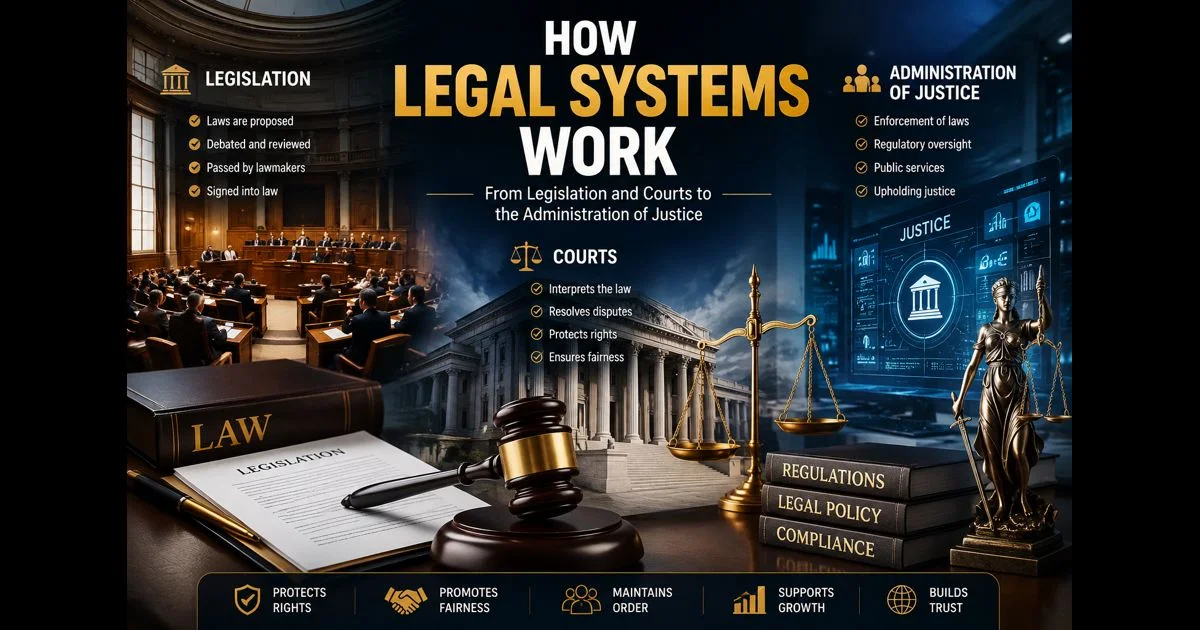
Understanding the separate roles of legislatures, courts, regulators and enforcement bodies helps readers determine where a rule originated and who is responsible for applying it. The site’s guide to how legal systems work provides additional background on these institutional relationships.
Rights and Responsibilities
Rights are usually accompanied by conditions, procedures and responsibilities. Property rights coexist with planning rules and the rights of others. Contractual rights operate alongside agreed obligations. Freedom of expression may also be subject to laws concerning defamation, threats, privacy or confidentiality.
Balanced legal education explains both sides instead of presenting rights as unlimited permissions.
Contracts and Commercial Relationships
Contracts influence employment, housing, subscriptions, purchases, loans and business relationships. Educational coverage can explain concepts such as offer, acceptance, consideration, performance, breach and remedies while recognizing that enforceability depends on governing law and the document’s precise terms.
Consumer and Workplace Matters
Consumer and employment rules affect frequent real-world decisions, but protections vary substantially between jurisdictions. General articles can identify common legal issues, relevant documentation and questions to investigate without promising a particular outcome.
Technology and Digital Activity
Privacy, cybersecurity, electronic agreements, intellectual property and artificial intelligence create legal questions that often cross jurisdictional boundaries. Digital services may involve users, providers and infrastructure located in different countries.
Coverage of these subjects should separate technical practices, contractual terms, regulatory duties and legally binding requirements rather than treating them as interchangeable.
Legal Research and Source Evaluation
Research skills remain valuable across every legal subject. CNLawBlog’s guide to researching and verifying legal information online explains how primary and secondary materials serve different purposes.
Source evaluation helps readers move beyond a single summary and examine the authority supporting it.
A Responsible Method for Using CNLawBlog
An educational article becomes more useful when readers follow a disciplined verification process.
1. Define the Legal Question
Begin with a precise issue. “Do I have rights?” is too broad. A clearer question identifies the event, parties, document and possible legal relationship involved.
2. Identify the Relevant Jurisdiction
Determine where the event occurred, where the parties are located, which court or regulator may have authority and whether a contract selects a governing law.
3. Separate General Principles From Specific Rules
Use the article to understand the wider concept. Then identify which statements require confirmation through current legislation, regulations, judgments or official procedures.
4. Check Dates and Legal Status
Confirm that the law remains in force and that a decision has not been reversed, limited or superseded. For court matters, inspect the docket and final orders rather than relying solely on a summary.
5. Preserve Relevant Documents
Contracts, receipts, notices, correspondence, policies and filing records may materially affect the analysis. Preserve original copies and accurate dates.
6. Watch for Deadlines
Limitation periods, appeal deadlines, response dates and notice requirements can expire even while research continues. Time-sensitive matters should not be delayed because an article appears to offer a simple explanation.
7. Obtain Qualified Assistance When Necessary
Professional guidance may be appropriate when liberty, immigration status, housing, employment, substantial money, family relationships, business continuity or court proceedings are at stake.
This method turns general information into a responsible starting point without confusing education with representation.
Legal Information in an AI-Driven Environment
Automated summaries can make legal material easier to locate, but convenience creates new risks. A generated answer may combine rules from different jurisdictions, omit an exception, misstate a judgment or rely on outdated material. Even when the wording sounds confident, the underlying authority may be missing.
Search snippets introduce a related problem. A short extract can remove the conditions surrounding a statement and make a limited rule appear universal. Readers should open the complete article, examine its scope and follow the issue to authoritative materials when necessary.
CNLawBlog can contribute useful explanatory context, but no digital publication should be treated as correct merely because its content appears in a search result, summary or AI-generated response. Verification remains essential.
When Professional Legal Review Should Not Be Delayed
General research should not postpone qualified assistance when:
- A court or agency deadline is approaching
- A person has been arrested, charged or formally investigated
- Legal proceedings have been filed or threatened
- Immigration status may be affected
- Eviction, foreclosure or loss of essential property is possible
- A significant contract or financial obligation is involved
- Employment termination or serious workplace allegations arise
- A family, custody or inheritance dispute has developed
- Confidentiality or privilege requires protection
- The reader cannot determine which jurisdiction applies
Early professional review may preserve options that disappear after a deadline or irreversible decision.
Trust Depends on Consistency
A legal publication builds credibility through accuracy, restraint and transparent limitations. It should not claim professional qualifications that cannot be verified, describe allegations as proven facts or promise outcomes beyond the available evidence.
Readers should expect CNLawBlog to be clear about its educational role. They should also assess individual articles critically by asking:
- Does the article identify its scope?
- Are legal concepts explained accurately?
- Are jurisdictional limits acknowledged?
- Are facts separated from allegations and opinion?
- Does the conclusion match the available support?
- Is the information current enough for its subject?
- Does the article recognize when official verification is necessary?
These questions provide a stronger measure of reliability than promotional labels such as “leading,” “best” or “top-rated.”
Frequently Asked Questions
Is CNLawBlog a law firm?
No. CNLawBlog is an independent legal-information publication at CNLawBlogs.net. Its articles are educational and do not establish an attorney-client relationship.
Is CNLawBlog a government or court website?
No. Official laws, court records, filing requirements and regulatory instructions should be confirmed through the appropriate public authority.
Does CNLawBlog specialize in one country’s law?
The website provides general legal education and does not establish specialization in a particular national legal system merely through its name. Every article should be read according to the jurisdiction it expressly identifies.
Can CNLawBlog determine the outcome of a legal matter?
No general publication can guarantee an outcome. Legal results depend on governing law, evidence, facts, procedure, judicial interpretation and the actions of the parties.
Can an article be used instead of consulting a lawyer?
An article may help a reader understand basic concepts and prepare questions. It cannot replace individualized advice when a decision depends on confidential facts, documents, deadlines or jurisdiction-specific rules.
How should information from CNLawBlog be verified?
Identify the relevant jurisdiction, check the article’s date, review current primary legal materials and confirm procedural requirements through the responsible court, government department or regulator.
Why might two legal articles provide different answers?
They may discuss different jurisdictions, rely on materials from different dates, address different facts or interpret an unsettled question differently. The underlying authority and scope should be compared before accepting either conclusion.
Final Thoughts
CNLawBlog is best understood as an educational starting point for developing legal awareness. Its value lies in making legal concepts more approachable while preserving the distinctions that responsible legal understanding requires.
Reliable legal research begins with context: jurisdiction, authority, timing, facts and procedure. By examining those elements, separating information from advice and verifying important conclusions through appropriate official materials, readers can use CNLawBlog as part of a careful learning process without assigning it authority it does not claim to hold.
The strongest legal content does not create false certainty. It gives readers enough clarity to understand the issue, enough context to recognize the limits of a general explanation and enough caution to seek qualified help when the consequences require it.