Legal knowledge is more than knowing a rule or finding a legal definition. It is the ability to understand where a rule comes from, which jurisdiction it applies to, whether it remains current, and how facts and procedure can change its effect.
Law affects ordinary decisions involving work, housing, contracts, consumer purchases, family matters, online activity, businesses, and disputes. Yet a legal answer that is correct in one country, state, province, or court may be incomplete or wrong elsewhere. Reliable understanding starts with source quality and context.
CNLawBlog presents legal topics as educational information. It is not a law firm, government body, court database, or substitute for advice from a qualified lawyer on a specific matter.
Law Is a System, Not a Single Rulebook
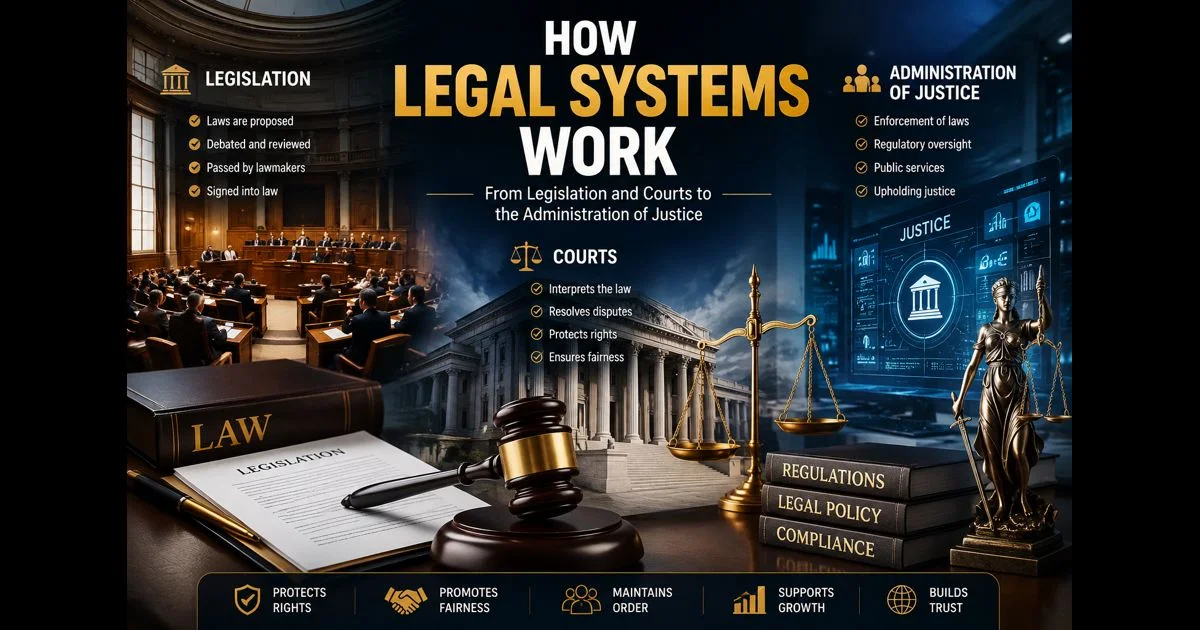
Legal systems organize rights, duties, public authority, remedies, and procedures. Their structure differs across jurisdictions, but most rely on recognised sources of law that work together.
A statute may establish a general rule. Regulations can explain how that law is administered. Court decisions may interpret uncertain language or apply it to disputed facts. Procedural rules determine how a claim is filed, defended, reviewed, or enforced.
A useful foundation is understanding how legal systems work. It helps explain why an answer cannot be separated from the legal system and location in which the issue arises.
The Main Sources of Legal Knowledge
Not all legal material has equal authority. Distinguishing primary sources from explanatory material prevents a common mistake: treating a summary as though it were the law itself.
Constitutions and foundational law
A constitution or similar foundational instrument may establish government powers, individual protections, and limits on public action. Its interpretation may depend on later legislation and court decisions.
Statutes and codes
Legislatures enact statutes. Codes often arrange those laws by subject, such as employment, tax, criminal law, property, or consumer protection. A statute should be read with attention to its defined terms, exceptions, effective date, and amendments.
Regulations and agency rules
Government agencies may issue regulations under authority granted by legislation. These rules can supply the detailed standards that affect licensing, compliance, benefits, safety, reporting, or enforcement.
Court decisions
Courts decide disputes by applying legal sources to facts. In many jurisdictions, earlier decisions guide or bind later courts, depending on the court’s level and location. A case may be persuasive without controlling the outcome.
Local rules and contractual terms
Municipal rules, workplace policies, leases, insurance documents, and contracts can also matter. They do not override higher law, but they may create practical obligations and deadlines.
Jurisdiction Changes the Answer
Jurisdiction means the legal authority connected to a place, court, subject, or person. It is one of the first issues to consider when assessing legal information.
A consumer-protection rule may differ between states. Employment rights can depend on national law, regional law, a collective agreement, or the terms of employment. A court may have authority over a dispute only when legal requirements concerning location, parties, or subject matter are met.
Before relying on any legal explanation, identify:
- The country, state, province, or local area involved
- The court, agency, or regulator with authority
- Whether the matter concerns civil, criminal, administrative, or private law
- The date of the event and the current version of the rule
- Any contract, notice, filing, or deadline that affects the situation
These details do not merely add background. They can determine whether a rule applies at all.
Legal Rights Include Responsibilities and Limits
Legal rights are often discussed as broad protections, but their operation can depend on conditions, procedures, evidence, and competing rights.
For example, a person may have a right to challenge a decision, but need to act within a strict filing period. A buyer may have consumer protections, while also needing to preserve receipts or follow a prescribed complaint process. A business may rely on a contractual right only if notice requirements were met.
A balanced understanding of legal rights and responsibilities helps avoid the assumption that a general right guarantees a particular result.
Why Current Information Matters
Law changes through new legislation, revised regulations, court rulings, and agency guidance. An older article can remain useful for background while no longer describing the current rule.
Currentness should be checked carefully when the issue involves:
- Filing dates or limitation periods
- Tax, immigration, benefits, or licensing requirements
- Penalties and regulatory compliance
- Consumer, employment, or privacy protections
- Emergency rules or recently amended laws
The publication date alone is not enough. Look for the date of the legal source, later amendments, and whether subsequent decisions changed its interpretation.
Read Legal Information With the Facts in View
Legal rules are applied to facts, and small differences can have large consequences. A summary may describe a principle accurately while omitting the facts that controlled the outcome in a court decision.
When reviewing a legal issue, separate the material into four parts:
- The rule: What law, regulation, contract, or precedent is relevant?
- The facts: What happened, when, where, and to whom?
- The procedure: What notice, evidence, forum, or deadline is required?
- The remedy: What outcome can the decision-maker lawfully provide?
This approach makes legal information easier to assess without assuming that a single article can resolve an individual matter.
Verify Information Before Acting
Reliable legal research begins with primary and official material where available. Government legislation portals, court websites, regulators, and official publications are generally stronger starting points than unsourced summaries.
Secondary sources can still be valuable. They can explain complex rules in plain language, identify relevant authorities, and show how a topic fits into a wider legal framework. Their claims should remain traceable to recognised sources.
For a practical method, see how to research and verify legal information online. Verification is especially important before making a payment, signing an agreement, missing a deadline, filing a claim, or sharing sensitive documents.
When Professional Legal Help Is Necessary
General legal information cannot account for every fact, deadline, local rule, or strategic consequence. Qualified legal advice is particularly important where a person faces arrest, court proceedings, loss of housing, dismissal from work, immigration consequences, major financial exposure, a business dispute, or an urgent deadline.
A lawyer can assess documents, evidence, applicable law, procedural options, and risks in the relevant jurisdiction. No article can guarantee an outcome or replace that case-specific assessment.
Final Thoughts
Legal knowledge becomes dependable when it is grounded in recognised sources, read within the correct jurisdiction, checked for currentness, and applied carefully to the facts. Clear legal education can help readers ask better questions and recognise when a matter requires qualified advice.