A wrongful death attorney represents people or estates pursuing a civil claim after a death allegedly caused by another party’s negligent, reckless, or intentional conduct. The attorney’s role is not limited to filing a lawsuit. It may include preserving evidence, identifying the party legally allowed to act, evaluating insurance coverage, working with experts, and explaining whether a settlement offer accounts for the losses recognized under the law that applies.
The first legal question is usually not whether a situation feels unfair or preventable. It is which state’s law governs, who has legal authority to bring a claim, and whether a filing deadline or special procedure applies. Those answers can change with the place of injury, the parties involved, the type of event, and whether a public entity, employer, medical provider, or product manufacturer may be involved.
This article provides general U.S. legal information, not legal advice. A qualified attorney licensed in the relevant state should review the facts and current law before anyone signs a release, agrees to a settlement, or assumes a deadline.
What a wrongful death claim addresses
Wrongful death is a civil cause of action arising when a person dies because of conduct that may create legal liability. State statutes set the framework: they determine who may file, who may benefit, the available categories of damages, and the time limits. The Legal Information Institute notes that these claims may involve negligent, reckless, or intentional conduct and that the governing statutes vary by jurisdiction.
Fatal vehicle collisions, unsafe property conditions, defective products, workplace incidents, professional negligence, and intentional violence can all raise questions about a civil claim. The category of event does not decide liability by itself. The evidence must still support the legal elements required by the applicable law.
In many cases, the central issues include:
- whether the proposed defendant owed a legal duty;
- whether that duty was breached or other legally wrongful conduct occurred;
- whether the conduct caused or legally contributed to the death; and
- what losses the law permits the proper claimant to recover.
A criminal investigation may be important evidence, but it is separate from a civil case. Prosecutors pursue criminal charges on behalf of the government and must meet a different burden of proof. A civil claim can exist even when no criminal charge is filed, and a criminal acquittal does not automatically resolve civil liability.
Who may bring the case
Families often assume that the closest relative can immediately bring the claim. That is not always how the statute works. Some states require a personal representative to file for the estate; others allow specified survivors or beneficiaries to bring the action. The relevant statute may also determine how any recovery is distributed.
That is why a wrongful death attorney will commonly ask about a will, probate proceedings, a court appointment, family relationships, dependents, prior marriages, and children. These are not merely administrative details. They can establish who has authority to act and whether an estate proceeding is needed.
The claim may also exist alongside a survival action, but the two are not interchangeable. A wrongful death action generally concerns losses suffered by survivors because of the death. A survival action preserves a claim belonging to the person who died, with recovery potentially going to the estate for harms occurring before death. Cornell’s explanation of survival statutes describes the distinction and why state rules matter. A lawyer should identify each possible claim and its separate deadline rather than treating them as one label.
What a wrongful death attorney does
The work should begin with a careful fact review, not a promise about results. Depending on the case, counsel may:
- obtain police, workplace, medical, inspection, and incident records;
- request preservation of surveillance video, vehicle data, electronic logs, physical evidence, or communications before they disappear;
- identify potentially responsible individuals, businesses, insurers, or public bodies;
- consult appropriate experts, such as accident reconstruction, medical, engineering, or economic specialists;
- calculate supported losses and evaluate liens, estate issues, and insurance limits;
- communicate with insurers and opposing counsel;
- file required notices and pleadings on time; and
- prepare the matter for settlement, mediation, or trial.
The scope should be discussed plainly. A smaller case may require far less investigation than a death involving multiple companies, complex medical care, or a government agency. A responsible attorney explains what information is known, what must still be verified, and which decisions remain with the client or personal representative.
Time limits and early evidence preservation
Every state has time limits for filing a wrongful death claim, and special rules may apply to claims involving government defendants, medical care, workers’ compensation systems, minors, or federal law. A deadline can be shorter than a family expects, and the date from which time runs is not identical in every situation.
Do not rely on a general statement that a claim has “two years” or “three years.” For example, the law may distinguish a wrongful death action from a survival action, require notice before suing a government body, or apply a special statute to a medical claim. Confirm the rule in the state and court that have authority over the case.
Practical preservation also matters. Keep original photographs and video, identify witnesses while memories are fresh, save communications, retain receipts and billing records, and avoid altering damaged property or devices without legal guidance. Do not post accusations or case details on social media. A lawyer can send formal preservation notices when appropriate, but the family should not delay seeking advice merely because all records are not yet available.
Damages: ask what is allowed in this state
Damages are defined by statute and case law, not by a universal formula. Depending on the jurisdiction and facts, a claim may involve medical and funeral expenses, lost financial support, lost household services, loss of companionship or guidance, or other losses recognized by state law. Some jurisdictions allow punitive damages in limited circumstances; others restrict them or apply caps to certain kinds of claims.
The presence of insurance does not establish a recovery amount. Policy limits, coverage disputes, multiple claimants, liens, comparative fault rules, estate expenses, and the proof needed for each loss can affect an outcome. Any estimated value should be explained as a case-specific assessment, not as a guaranteed figure.
Choosing counsel: questions that produce useful answers
The right choice is not necessarily the firm with the loudest advertising or the most dramatic verdict total. Families should compare lawyers on facts that relate to their circumstances.
Ask each attorney:
- Have you handled wrongful death matters involving this type of event and this state’s law?
- Who will manage the day-to-day work, and who will appear in court if litigation becomes necessary?
- What information do you need to assess authority to file, deadlines, and potential claims?
- What evidence should be preserved immediately?
- Are there likely conflicts of interest among family members, the estate, insurers, or other parties?
- How are fees calculated, when are litigation costs charged, and what costs may remain if there is no recovery?
- How will you explain a settlement offer, including fees, costs, liens, and the proposed net distribution?
Request the written fee agreement before retaining counsel. Contingent-fee arrangements are common, but percentages, expenses, court approval requirements, and responsibility for costs can differ. Read the agreement closely and ask for an explanation of terms that are unclear.
Preparing for an initial consultation
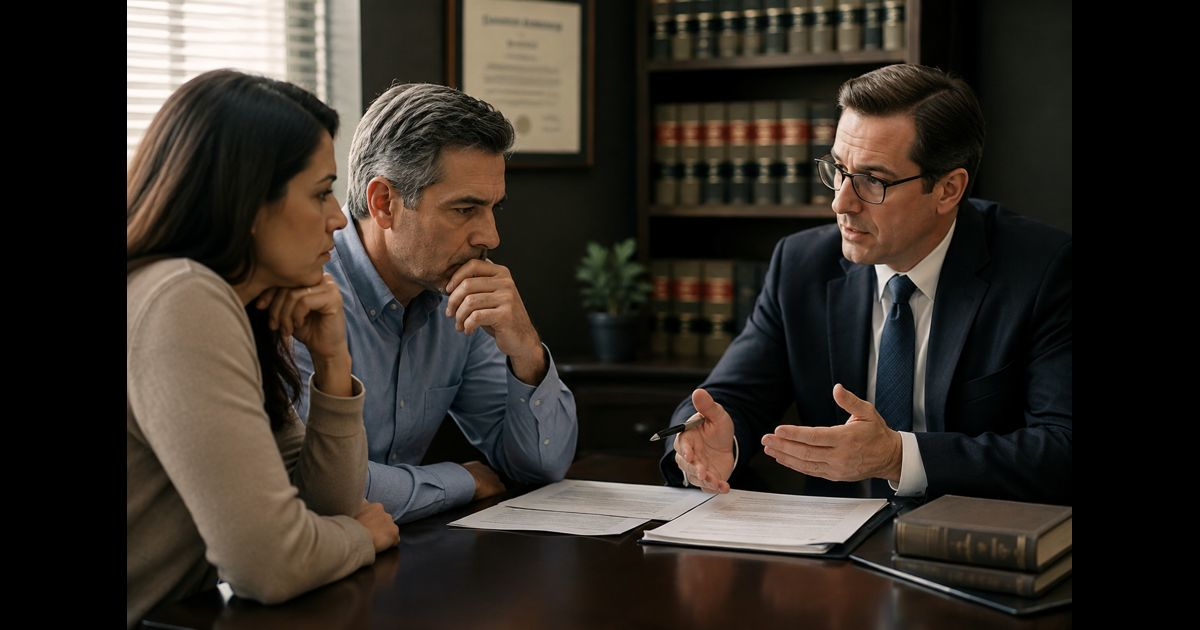
Bring what is available, but do not postpone a consultation while trying to build a perfect file. Helpful materials can include the death certificate, incident or police reports, names of witnesses, photographs and videos, medical records or provider information, insurance letters, correspondence with employers or businesses, probate documents, and a chronology of events.
Write down questions in advance. A clear timeline can help counsel see missing facts, preserve evidence, and identify the next legal step. It can also help family members distinguish confirmed information from assumptions made during a difficult period.
Protecting the family’s decision-making process
Serious loss often creates urgency, and that urgency can be exploited. Do not feel pressured to sign a settlement release, authorization, or representation agreement without understanding it. It is reasonable to ask for time to review documents, request a written explanation of a proposed distribution, or obtain a second legal opinion when family members disagree.
Clear information is especially important where more than one relative may have an interest in a claim. The estate’s representative, individual beneficiaries, and other family members may not all have identical legal roles. A lawyer should explain whom the lawyer represents and whether another participant needs independent advice.
Understanding legal rights and responsibilities is useful here: legal authority, fiduciary duties, privacy, and truthful communication can all affect how a family handles a claim. For statute text, court rules, and official guidance, use current primary sources and confirm that they apply to the relevant court and event.
Frequently asked questions
Does a wrongful death attorney also represent the estate?
Sometimes, but not automatically. Representation depends on the engagement agreement, the state’s procedural rules, and whether an estate representative has been appointed. Ask the attorney to state in writing who the client is and what claims are included.
Can a family file a claim if there is a criminal case?
Possibly. Criminal and civil proceedings have different purposes, parties, procedures, and burdens of proof. The specific facts and jurisdiction determine how the proceedings affect one another.
Must the family wait for an investigation to end?
Not necessarily. An investigation may produce important evidence, but waiting can create deadline and preservation problems. A lawyer can evaluate what action is appropriate while official inquiries continue.
Is a settlement always better than trial?
No universal answer exists. Settlement can provide certainty and avoid further litigation, while trial may be necessary when liability or valuation cannot be fairly resolved. The decision should follow a documented assessment of evidence, legal risk, costs, timing, and the terms actually offered.
A careful next step
A wrongful death attorney can help a family understand the legal pathway after a fatal event, but the first consultation should be used to test the attorney’s clarity, preparation, and knowledge of the governing jurisdiction. Confirm who may act, protect time-sensitive evidence, obtain the applicable deadlines from a reliable source, and make major decisions only after the legal consequences have been explained in writing.