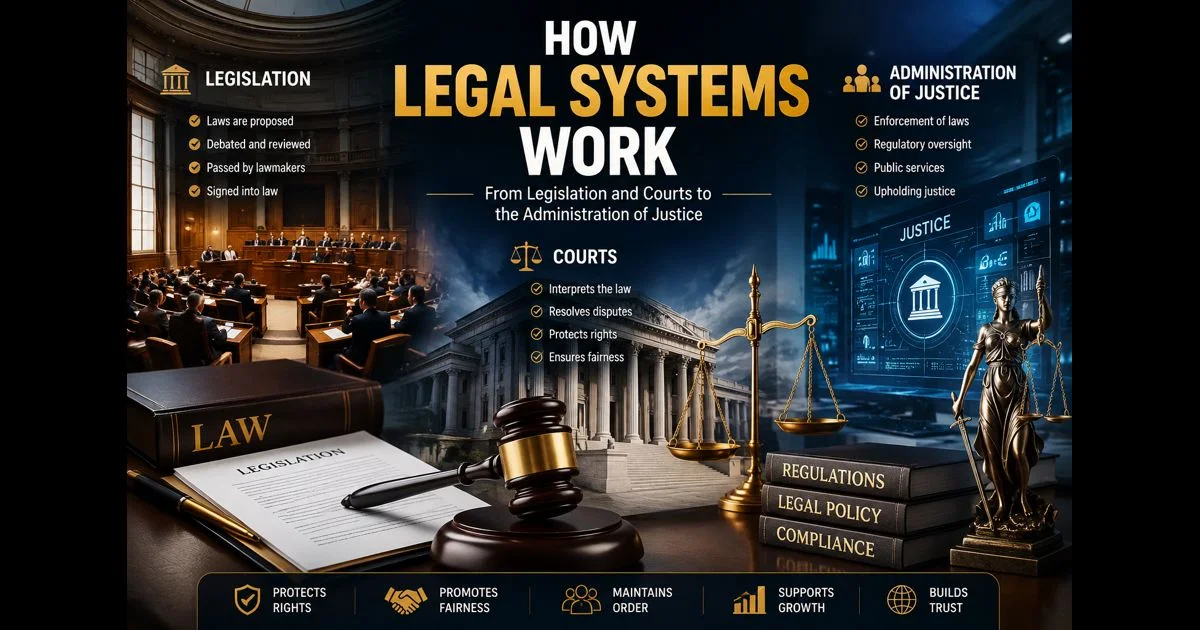
Doing business in mainland China can involve company registration, foreign-investment controls, contracts, intellectual property, data protection, employment, product regulation, taxation, and dispute resolution. These obligations do not operate independently. A decision about business structure may affect licensing, while a contract may raise separate questions about payments, data transfers, intellectual property, and enforcement.
CN Law Blog provides educational coverage of these connected subjects for businesses, researchers, and readers seeking an organized starting point. It is an independent legal-information publication, not a law firm, regulator, court, or government database.
This guide explains the principal legal and compliance areas a business may need to examine before entering or expanding a commercial relationship in mainland China. The requirements affecting a particular operation will depend on its location, industry, ownership, activities, contracts, and handling of information.
Establish the Jurisdiction and Business Activity
The first step is identifying where the relevant activity occurs and which legal system governs it. Mainland China, Hong Kong, Macao, and Taiwan should not be treated as a single jurisdiction for legal analysis.
Mainland China’s legal framework includes national legislation, State Council regulations, departmental rules, judicial interpretations, local measures, and industry-specific requirements. A business may need to review several of these sources before determining its obligations.
The initial assessment should establish:
- Where each party is registered
- Where goods will be produced or delivered
- Where services will be performed
- Which entity will receive payment
- Whether regulated activities are involved
- Which law governs the contract
- How disputes will be resolved
- Whether data, technology, or funds will cross borders
A company’s commercial description is not enough. Its actual activities, registered business scope, licences, ownership, and transaction structure must be considered together.
Verify the Chinese Counterparty
Before signing a contract or transferring funds, Chinese company verification should compare official registration information with the details supplied by the counterparty.
Important identifiers may include:
- Full registered Chinese name
- Unified Social Credit Code
- Registration status
- Registered address
- Legal representative
- Registered capital information
- Business scope
- Shareholders or ownership information
- Required licences
- Payment beneficiary
An English trading name may not uniquely identify the registered entity. Contracts, invoices, business licences, email signatures, and bank instructions should therefore be checked for consistency.
Additional scrutiny may be appropriate when:
- The contract names a different entity from the business licence
- Payment is requested to an individual or unrelated company
- The supplier will not provide its registered Chinese name
- The stated business activity falls outside the registered scope
- A company claims to manufacture goods but provides no verifiable production details
- Licensing claims cannot be confirmed
- Different documents show conflicting addresses or registration numbers
Registry information is only one part of due diligence. It does not establish financial stability, product quality, ownership of a factory, or the absence of commercial disputes.
Review Foreign-Investment Restrictions
Foreign investors must consider the legal form of the investment, the intended business activity, sector restrictions, licensing requirements, and any applicable approval or filing procedures.
The Foreign Investment Law operates alongside the negative-list system. Investment in a prohibited field is not permitted, while investment in a restricted field must comply with the stated conditions. Activities outside the applicable negative list may still be subject to ordinary market-access, licensing, competition, security, and industry requirements.
A market-entry review may need to determine:
- Whether foreign ownership is allowed
- Whether an ownership limit or local partner is required
- Which company structure is appropriate
- Whether national-security review may apply
- What business licences or permits are required
- Whether the project involves restricted technology
- How capital will be contributed
- Whether local operating conditions apply
- Which reporting obligations must be satisfied
The applicable negative list and sector rules should be checked directly. A general market summary may not reflect the requirements affecting a particular activity or location.
Understand Company and Capital Obligations
Company law affects establishment, governance, shareholder responsibilities, capital contributions, recordkeeping, and changes to registered information.
Investors should understand the difference between registered capital and the funds available for actual operations. A high registered-capital figure should not be treated automatically as evidence that the company holds equivalent cash or assets.
Corporate planning may involve:
- Capital contribution amounts and schedules
- Shareholder rights and responsibilities
- Appointment of directors and senior personnel
- Articles of association
- Decision-making authority
- Legal-representative arrangements
- Transfer of equity
- Profit distribution
- Corporate records
- Changes to registered details
- Dissolution and liquidation
Governance documents should reflect the intended commercial arrangement rather than rely entirely on a generic formation template. Authority over bank accounts, contracts, company chops, intellectual property, personnel, and major decisions should be considered before the company begins operating.
Use Contracts That Match the Transaction
A cross-border contract should clearly identify the parties, goods or services, payment structure, performance standards, allocation of risk, and dispute-resolution method.
The Chinese counterparty should ordinarily be identified by its complete registered legal name. The Unified Social Credit Code and registered address may provide additional certainty about the entity assuming the obligation.
Depending on the transaction, the contract may need to address:
- Technical specifications
- Samples and approved materials
- Quality-control procedures
- Inspection and acceptance
- Production and delivery schedules
- Pricing and payment stages
- Currency and banking costs
- Subcontracting
- Confidential information
- Intellectual-property ownership
- Product tooling and molds
- Regulatory documents
- Warranties
- Product recalls
- Breach and termination
- Governing language
- Governing law
- Litigation or arbitration
A company chop or signature should not be examined in isolation. Its significance depends on the contracting entity, signer’s authority, document, and surrounding circumstances.
Payment terms also require operational controls. The beneficiary named in the payment instructions should be compared with the contracting party, invoice, and verified company information. Any last-minute change in bank details should be confirmed through an independently verified communication channel.
Protect Intellectual Property Early
Intellectual-property planning should begin before a brand, invention, design, software product, or manufacturing file is shared commercially.
China’s intellectual-property framework includes trademarks, patents, copyright, trade secrets, and protections against certain forms of unfair competition. Each right has different requirements and enforcement options.
Trademarks
Businesses may need to consider:
- Primary brand names
- Logos
- Product names
- Chinese-language versions of a brand
- Relevant classes and subclasses
- Names used by distributors
- Domain names
- Customs-related protection
The China National Intellectual Property Administration provides official information about trademark applications and procedures. A filing strategy should reflect the goods, services, territories, and commercial use involved.
Patents and Designs
Patent protection may be relevant to inventions, utility models, and designs. Public disclosure before filing can create serious complications, so timing should be reviewed before showing technical material at exhibitions, sending production files, or approaching manufacturers.
Trade Secrets
Trade-secret protection depends partly on whether reasonable confidentiality measures were actually used. These may include:
- Restricted access
- Confidentiality clauses
- Internal information classifications
- Secure document storage
- Employee and contractor controls
- Records of authorized disclosure
- Clear limits on permitted use
- Exit procedures for personnel
A nondisclosure agreement can support protection, but it should form part of a broader information-control process.
Address Data and Cybersecurity Obligations
Businesses collecting or processing information in mainland China may need to consider the Cybersecurity Law, Data Security Law, Personal Information Protection Law, industry rules, and measures governing cross-border data transfers.
The analysis depends on the information involved, the reason for processing it, the people who can access it, the location of storage, and whether it will be provided outside mainland China.
A compliance review may examine:
- Types of personal information collected
- Purpose and necessity of processing
- Information provided to individuals
- Consent and separate-consent requirements
- Sensitive personal information
- Retention periods
- Access permissions
- Vendor and processor arrangements
- Security safeguards
- Incident-response procedures
- Personal-information protection impact assessments
- Cross-border transfers
- Important-data considerations
The Cyberspace Administration of China’s cross-border data provisions address exemptions, thresholds, security assessments, standard contracts, and certification. The applicable route depends on the organization, data category, volume of personal information, presence of sensitive information, and whether important data is involved.
Publishing a privacy notice does not by itself establish compliance. The organization’s collection, access, storage, sharing, transfer, and deletion practices must correspond with its stated policies and applicable requirements.
Manage Employment Compliance
Employment relationships in mainland China are affected by national legislation, local requirements, written contracts, workplace policies, social-insurance obligations, and termination procedures.
An employment review may involve:
- Written employment contracts
- Probation periods
- Working hours and overtime
- Salary and benefits
- Statutory leave
- Social insurance
- Workplace rules
- Confidentiality
- Intellectual-property ownership
- Non-compete arrangements
- Performance management
- Disciplinary procedures
- Termination and severance
- Record retention
Mandatory employment protections cannot necessarily be removed through a contract. Local rules and practices can also affect the treatment of particular workplace issues.
Employers should ensure that policies are properly adopted, communicated, and supported by records. A termination decision should be reviewed for its legal basis, evidence, procedure, notice requirements, and financial consequences.
Foreign employees require separate attention to work authorization, residence documentation, and immigration compliance. An employment agreement alone does not establish permission to work.
Check Product, Advertising, and Consumer Rules
Companies selling goods or services in mainland China may face obligations concerning product quality, labelling, safety, advertising, pricing, e-commerce, warranties, and consumer protection.
The requirements can vary by product and sales channel. Food, cosmetics, medical products, electronics, vehicles, children’s products, and other regulated goods may be subject to specialized standards, registrations, testing, or approvals.
A product-compliance review may include:
- Mandatory standards
- Product classification
- Testing or certification
- Chinese-language labelling
- Import documentation
- Safety warnings
- Advertising evidence
- Price disclosures
- Warranty terms
- Refund and return procedures
- Customer complaints
- Product recalls
- Personal-information collection
Marketing claims should be accurate and supportable. Statements about performance, health effects, certification, market position, comparative advantages, or guaranteed results can create risk when evidence is incomplete.
Online sellers and platforms may also carry different responsibilities depending on their role in the transaction.
Consider Tax, Customs, and Foreign Exchange
A transaction that is commercially workable may still face tax, customs, or foreign-exchange complications.
Businesses may need to examine:
- Corporate income tax
- Value-added tax
- Withholding obligations
- Transfer pricing
- Permanent-establishment exposure
- Customs classification
- Import duties
- Export controls
- Customs valuation
- Invoicing requirements
- Currency conversion
- Cross-border payments
- Repatriation of profits
- Supporting bank documentation
Contract prices should account for relevant taxes, duties, banking requirements, and responsibility for customs procedures. Ambiguous commercial terms can create disputes over which party bears an unexpected cost.
Tax and customs treatment depends heavily on the transaction structure and supporting records. Advice should be obtained from suitably qualified professionals when the financial exposure is material.
Evaluate Competition and Transaction Controls
Certain agreements, acquisitions, joint ventures, distribution structures, pricing practices, and business conduct may raise competition-law concerns.
A review may be required where arrangements involve:
- Competitor coordination
- Resale pricing
- Market or customer allocation
- Exclusivity
- Tying or bundling
- Abuse of market position
- Mergers and acquisitions
- Joint ventures
- Concentrations of undertakings
- Restrictions affecting online platforms
A transaction can require analysis under more than one framework. Corporate approval does not automatically resolve competition, foreign-investment, data, or sector-regulation questions.
Businesses should examine the complete arrangement, including informal understandings and actual conduct, rather than relying solely on the wording of a written agreement.
Plan for Disputes Before They Arise
Dispute planning should take place while the parties are negotiating, not after performance has broken down.
Commercial disputes may be handled through negotiation, mediation, arbitration, litigation, or a combination of these methods. The suitable route depends on the contract, type of claim, location of assets, required remedy, confidentiality concerns, and available enforcement mechanisms.
Litigation
Court litigation may require analysis of:
- Jurisdiction
- Limitation periods
- Service requirements
- Evidence
- Translation and notarization
- Preservation measures
- Court fees
- Appeals
- Enforcement against assets
Mainland China generally applies a system in which the second instance is final. Retrial and supervisory procedures may exist under defined conditions, but they should not be treated as an ordinary additional appeal.
Arbitration
A commercial arbitration clause should clearly identify the chosen institution or otherwise provide a workable method for forming the tribunal. Ambiguous clauses can produce preliminary disputes about whether arbitration was validly agreed.
The parties should consider:
- Arbitration institution
- Seat or place of arbitration
- Governing law
- Language
- Number of arbitrators
- Interim measures
- Confidentiality
- Allocation of costs
- Enforcement
Negotiation and Mediation
A negotiated or mediated settlement can preserve commercial relationships and reduce procedural cost. The settlement should clearly record the obligations, deadlines, releases, consequences of non-performance, and available enforcement route.
Build an Ongoing Compliance Process
Compliance is not completed when a company is registered or a contract is signed. Business activities, personnel, ownership, products, information systems, and regulatory requirements can change.
A practical process may include:
- Assigning responsibility for each compliance area.
- Maintaining current corporate and licensing records.
- Reviewing counterparties before significant transactions.
- Using approved contract and payment procedures.
- Recording regulatory filings and renewal deadlines.
- Controlling access to confidential information.
- Monitoring intellectual-property registrations.
- Reviewing personal-information practices.
- Training relevant employees.
- Escalating unusual payments, documents, or requests.
- Preserving transaction and compliance records.
- Reassessing operations after material changes.
This process should reflect the company’s actual activities. A checklist copied from another industry may overlook the rules most relevant to the business.
Use Legal Sources Carefully
Reliable legal research separates primary legal materials from translations, summaries, commentary, news reports, and educational articles.
Primary materials may include:
- Legislation
- Administrative regulations
- Judicial interpretations
- Court decisions
- Regulatory measures
- Official notices
- Government databases
- Licensing requirements
English translations can make Chinese legal material more accessible, but the Chinese text may control. Translated terminology can also conceal technical distinctions that affect interpretation.
Before relying on a source, confirm:
- The issuing authority
- The jurisdiction
- The document’s legal status
- Whether it is currently effective
- Whether amendments exist
- Whether implementing measures apply
- Whether the translation is complete
- Whether local or sector rules add requirements
A recently published summary may still rely on an outdated source. The underlying authority matters more than the apparent recency of the article.
Common Compliance Mistakes
Businesses can reduce avoidable risk by recognizing recurring mistakes:
- Treating every Chinese jurisdiction as legally interchangeable
- Contracting under an informal English company name
- Assuming registration proves manufacturing capability
- Paying an account unrelated to the contracting entity
- Entering a restricted activity without checking market access
- Sharing intellectual property before considering protection
- Using a generic contract without an enforcement plan
- Treating a privacy policy as complete data compliance
- Ignoring local employment requirements
- Making marketing claims without adequate support
- Relying on a translated extract without reviewing its context
- Using outdated legislation or negative lists
- Confusing a filed allegation with a court finding
- Waiting for a dispute before preserving evidence
No checklist can eliminate every legal or commercial risk. Its purpose is to identify questions requiring verification before they become more difficult or expensive to address.
Frequently Asked Questions
Does one legal system apply across all Chinese jurisdictions?
No. Mainland China, Hong Kong, Macao, and Taiwan have distinct legal frameworks. The applicable jurisdiction should be identified before a rule, contract, or procedure is assessed.
Is a Chinese business licence sufficient due diligence?
No. A business licence can confirm important registration details, but it does not prove financial stability, manufacturing capacity, product quality, or the overall safety of a transaction.
Can a foreign investor operate in any industry?
Not necessarily. The applicable negative list, industry restrictions, ownership requirements, licences, national-security rules, and other market-access conditions must be considered.
Should intellectual property be reviewed before contacting a manufacturer?
Yes. Disclosure of a brand, design, invention, manufacturing file, or confidential process can create risk. Suitable trademark, patent, design, contractual, and confidentiality measures should be considered before sensitive material is shared.
Does a contract need to be written in Chinese?
The appropriate language depends on the parties, transaction, chosen forum, and enforcement plan. A bilingual agreement may be useful, but it should state how inconsistencies between language versions will be resolved.
Are cross-border transfers of personal information regulated?
Yes. The applicable requirements depend on the organization, information involved, purpose of transfer, recipient, volume, sensitivity, and whether important data is involved.
Is arbitration always better than litigation?
No. Each method has different procedural, cost, confidentiality, and enforcement considerations. The appropriate choice depends on the transaction and the location of relevant parties and assets.
Can CN Law Blog determine whether a company is legally compliant?
No. CN Law Blog provides general educational information. A compliance determination requires current official records, applicable legal materials, transaction-specific facts, and professional assessment where appropriate.
Final Thoughts
China business law and compliance require more than a general understanding of legislation. A reliable assessment connects the company, activity, industry, jurisdiction, contracts, information flows, intellectual property, personnel, payments, and enforcement options.
CN Law Blog can provide an organized educational starting point for examining these subjects. Its material should be used to identify issues, improve preliminary research, and prepare more focused questions—not to replace current official sources or advice based on the facts of a particular matter.
Businesses that verify counterparties, protect intellectual property early, document agreements carefully, control payments, evaluate data practices, and monitor regulatory obligations are better positioned to identify avoidable problems before they affect an operation or transaction.